

6600 University Parkway, Suite 306
Lakewood Ranch, FL 34240

Signs Your Child Might Struggle With Vision Issues in School
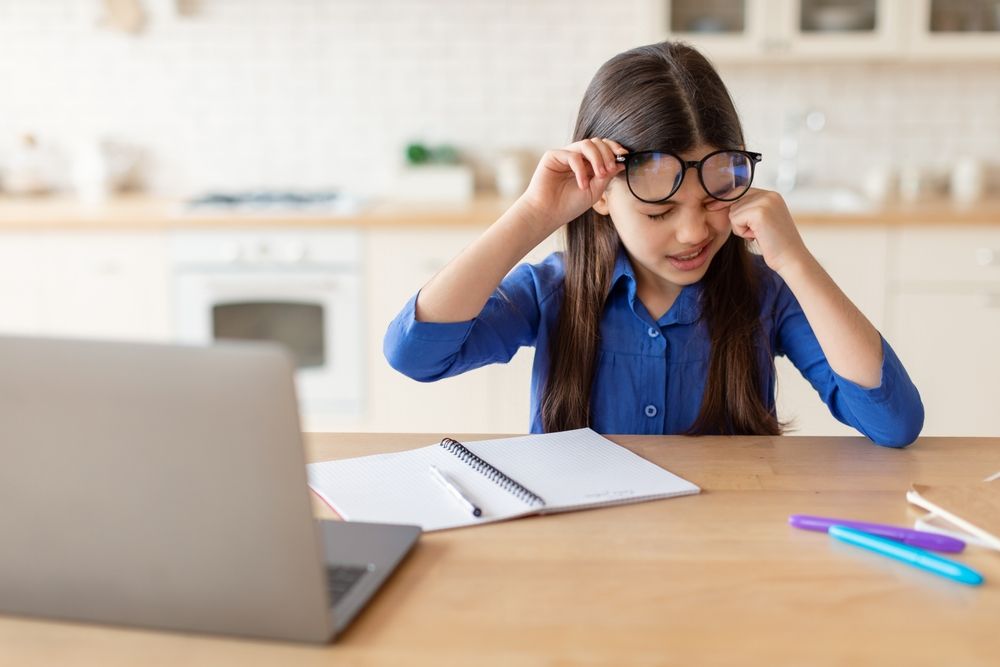
When a child has undiagnosed vision problems, the signs often show up as frustration, avoidance, or a sudden drop in performance. School requires sustained near focusing, accurate eye tracking, and comfortable teamwork between both eyes. If any of those skills are strained, reading and learning can feel harder than they should.
For families in Lakewood Ranch, recognizing early signs of child vision problems can help you address concerns before they affect confidence and progress in the classroom.
Frequent Headaches or Eye Strain After Reading
A child who complains of headaches after school, tired eyes, or burning sensations may be working too hard to keep print clear. This can happen with uncorrected farsightedness, astigmatism, focusing issues, or problems with eye teaming. You might also notice more squinting, excessive blinking, or rubbing the eyes during homework.
Avoiding Reading or Losing Place on the Page
If your child skips lines, uses a finger to track every sentence, or needs to reread the same paragraph repeatedly, it may point to a tracking issue. Strong eye tracking helps the eyes move smoothly and accurately from word to word. When tracking is inefficient, reading becomes slower, comprehension drops, and kids may decide they just “don’t like” reading.
Short Attention Span During Near Work
Difficulty staying focused on worksheets or books can be mistaken for a behavior or attention issue. In some cases, the real problem is visual fatigue. When the eyes cannot hold clear focus for long, the brain looks for relief by shifting attention away from the task. A children’s eye exam can help clarify whether vision is contributing to attention challenges.
Signs Teachers Often Notice First
Teachers may observe patterns that parents do not see at home, especially during reading groups, board work, and timed assignments. If you hear consistent feedback, it is worth scheduling a pediatric eye exam. Some concerns may be frequent loss of place while reading, slow copying from the board, messy spacing on math problems, or avoiding close-up tasks like writing and coloring.
Complaints About Double Vision or Blurry Words
Kids do not always describe symptoms clearly, but they may say words “move,” “shadow,” or “look fuzzy.” Double vision and intermittent blur can be linked to binocular vision issues, focusing instability, or a prescription that needs updating. If your child closes one eye, tilts their head, or turns their face to see better - those are important clues as well.
Schedule a Comprehensive Eye Exam with Artisan Eye
If signs are persistent for more than a couple of weeks, show up mainly during schoolwork, or are paired with headaches or reading avoidance, it is time to check vision. A comprehensive eye exam can evaluate prescription needs and functional skills like focusing, eye teaming, and tracking - the areas that directly impact school performance.
Contact Artisan Eye to schedule your child’s comprehensive eye exam. Visit our office in Lakewood Ranch, Florida, or call (941) 2442-2020 to book an appointment today.
Quick Links

All Eye
Care Services

Keep
In Touch

Contact Info
office hours
- Monday8:00am - 4:00pm
- Tuesday9:00am - 5:00pm
- Wednesday9:00am - 5:00pm
- Thursday9:00am - 5:00pm
- Friday9:00am - 1:00pm
- SaturdayClosed
- SundayClosed
© 2026 Artisan Eye. All rights Reserved. Accessibility Statement - Privacy Policy - Sitemap
Powered by:
